
Web Development for Beginners in 2026
7 min read
A Comprehensive Blueprint to Building Digital Experiences and Launching a High-Income Tech Career
|
Quick Summary |
1. Introduction: The Digital Landscape in 2026
In 2026, the web is no longer just a collection of static information pages—it is the modern foundation for global trade, entertainment, communication, and remote work. Every business, from local brick-and-mortar storefronts to multinational software corporations, relies on web infrastructure to connect with customers.
With the rapid integration of modern artificial intelligence tools, cloud technology, and immersive web experiences, learning web development today offers unprecedented potential. The barriers to entry are lower than ever, yet the demand for skilled developers who truly understand the fundamentals remains at an all-time high.
2. Web Design vs. Web Development: Understanding the Key Difference
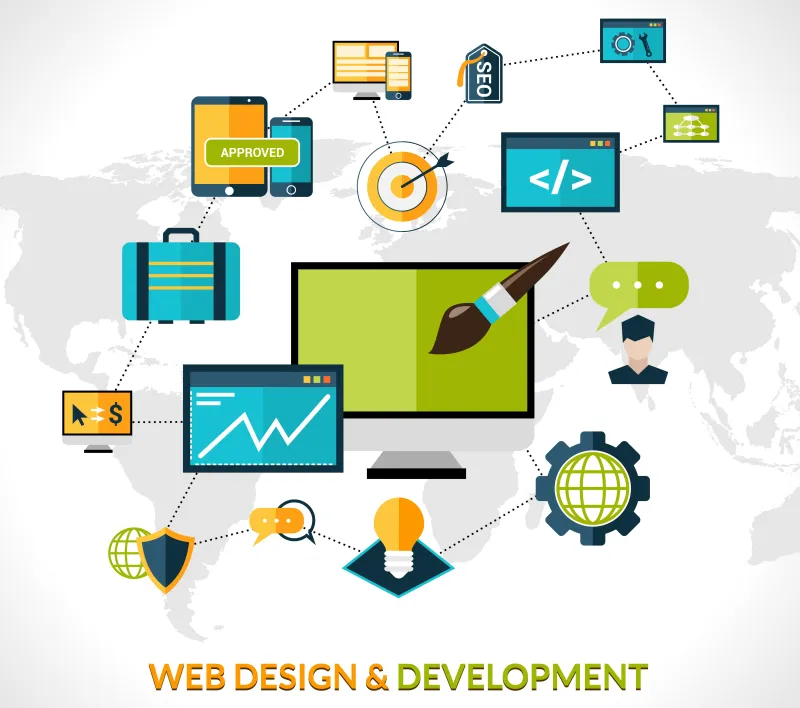
A common point of confusion for beginners is the distinction between web design and web development. While both disciplines collaborate to create a single website, they focus on entirely different skill sets and workflows:
|
Aspect |
Web Design (UI/UX) |
Web Development |
|
Core Focus |
Visual styling, layout, user interface (UI), and user experience (UX). |
Logic, functionality, architecture, and coding. |
|
Primary Tools |
Figma, Adobe XD, Canva, Sketch, Color Palette Generators. |
VS Code, Git, JavaScript, Python, PHP, Cloud Servers. |
|
Primary Goal |
Ensure the site is appealing, modern, intuitive, and accessible. |
Ensure the site runs fast, stays secure, processes data, and responds accurately. |
Think of a website as a modern house: the web designer acts as the interior designer and architect, choosing colors, furniture layout, and spatial aesthetics. The web developer is the structural engineer and electrician, laying down the foundation, wiring, and plumbing to make sure light switches work and doors open smoothly.
3. Fundamentals of Web Design & Development
To build a modern web application, beginners must grasp three fundamental pillars:
· 1. Front-End Aesthetics: User Experience (UX) & User Interface (UI): Designing clean, mobile-responsive layouts that adjust seamlessly to smartphones, tablets, and desktop monitors.
· 2. Architecture: Client-Side vs. Server-Side Execution: Understanding what runs inside the user's web browser (Front-End) versus what runs on hidden cloud servers and databases (Back-End).
· 3. Standards: Web Performance & Accessibility (a11y): Writing clean code that loads rapidly over mobile networks and ensures usability for people with diverse physical abilities.
4. Core Foundation Languages for Beginners
To succeed as a web developer in 2026, you must understand the essential building blocks of the web. Below is a detailed breakdown of the primary languages every beginner should know:
HTML5 (HyperText Markup Language)
HTML is the structural skeleton of any webpage. It uses elements and tags to structure headings, paragraphs, images, links, forms, and video content. You cannot build a website without HTML.
· Key Role: Defines structural hierarchy (H1, H2, Article, Section, Footer).
· Learning Curve: Extremely fast to learn; master the essentials within 1–2 weeks.
CSS3 (Cascading Style Sheets)
CSS controls the aesthetic presentation of the HTML skeleton. It allows developers to customize colors, typography, spacing, page grids, animations, and responsive breakpoints for mobile devices.
· Key Role: Transforms raw HTML text into sleek, modern visual interfaces.
· Key Ecosystem: Modern utilities like Flexbox, CSS Grid, and Tailwind CSS make styling efficient.
JavaScript (JS)
JavaScript brings web pages to life by adding interactivity, dynamic content updates, real-time validations, popups, and full web application capabilities. In 2026, JavaScript runs both in the browser and on the server (via Node.js).
· Key Role: Adds programming logic, loops, conditionals, and API interactivity.
· Why It Matters: The most essential, versatile programming language in modern tech.
PHP (Hypertext Preprocessor)
PHP is a battle-tested server-side scripting language powers over 75% of the active web today, including major platforms like WordPress, Wikipedia, and WooCommerce. It is exceptional for handling database queries, content management, and e-commerce platforms.
· Key Role: Server-side page rendering, CMS management, fast database CRUD operations.
· Why Learn It: Massive career opportunities due to global enterprise and small business usage.
Python
Python is renowned for its human-readable syntax and versatility. In web development, frameworks like Django and FastAPI enable developers to build secure, scalable back-end services, AI-powered web tools, and data analytics dashboards.
· Key Role: Back-end logic, API development, AI/Machine Learning integration.
· Why Learn It: Beginner-friendly syntax with immense industry demand.
5. Tech Stack Ecosystem & Tech Stack Salaries in 2026
According to research: In web development, tools are grouped into cohesive 'stacks'. Here is how modern stacks break down in 2026 alongside typical mid-level annual salary expectations (Global Averages):
|
Tech Stack |
Technologies Included |
Average Annual Salary (USD) |
|
Front-End Stack |
HTML5, CSS3, JavaScript, React.js / Vue.js, Tailwind CSS |
$75,000 – $115,000 / yr |
|
Back-End Stack |
Node.js / Python (Django) / PHP (Laravel), PostgreSQL, REST APIs |
$85,000 – $130,000 / yr |
|
Full-Stack (MERN / LAMP) |
React, Node.js, Express, MongoDB OR PHP, MySQL, Apache, JS |
$95,000 – $145,000 / yr |
6. Business Opportunities in Web Development
Learning web development equips you with entrepreneurial freedom. In 2026, web developers can leverage several business models:
· 1. Freelancing & Agency Services: Build custom websites, e-commerce stores, and booking engines for local businesses, earning per project ($1,000–$10,000+) or monthly retainers.
· 2. SaaS (Software-as-a-Service): Develop niche web applications, micro-SaaS tools, or workflow automation platforms that generate recurring monthly subscription revenue.
· 3. Digital Products & Templates: Create custom themes, plug-ins, UI templates, or website building blocks to sell on digital marketplaces.
· 4. Tech Consulting: Partner with global businesses to deliver long-term web maintenance, performance tuning, and technical SEO optimizations.
7. Web Developer vs. Other Tech Roles: Local & International Pay Comparison
How does web development compare against other popular entry-level tech paths in 2026? Below is a clear comparison of career scope, local emerging market salaries, and international remote tech compensation:
|
Tech Role |
Primary Skill Focus |
Local Market Pay (Est. Yearly) |
International / Remote Pay |
|
Web Developer |
HTML, CSS, JS, Back-End Frameworks |
$8,000 – $22,000 USD |
$65,000 – $130,000 USD |
|
Data Analyst |
SQL, Python, PowerBI, Excel |
$7,000 – $20,000 USD |
$60,000 – $110,000 USD |
|
Graphic Designer |
Photoshop, Illustrator, Branding |
$4,000 – $14,000 USD |
$40,000 – $75,000 USD |
|
Content Writer |
SEO Writing, Copywriting, Editing |
$3,500 – $12,000 USD |
$35,000 – $68,000 USD |
8. Hardware & Software Requirements to Jumpstart
You do not need an expensive supercomputer to begin your web development journey. Here are the baseline requirements for 2026:
· Hardware: Any computer running Windows, macOS, or Linux with at least 8GB RAM (16GB recommended) and a dual-core processor.
· Internet: Reliable connection for downloading packages, watching video tutorials, and inspecting live web resources.
· Software / Code Editor: Sublime Text, VS Code (Visual Studio Code)—the industry standard free code editor with extensions like Live Server and Prettier.
· Web Browser: Google Chrome, Mozilla Firefox, Microsoft Edge or Brave (equipped with Developer Tools for debugging code).
9. Learning Pathways: Personal Development vs. Platforms vs. Bootcamps
Learning the right pathway for yourself most time can be overwhelming and time-consuming, here is a guide in Choosing the right learning pathway, this majorly depends on your budget, self-discipline, and preferred schedule. Here is how the options stack up in 2026:
Option A: Self-Paced Online Platforms (Coursera, edX, Udemy)
· Pros: High flexibility, learn anytime, affordable monthly subscription or course purchase, certificates from recognized top universities.
· Cons: Requires high self-discipline; no direct real-time oversight.
· Recommendation: Best for self-motivated individuals balancing full-time jobs or school.
Option B: Personal Self-Directed Development (Free Resources)
· Pros: Zero cost; leverage free documentation (MDN Web Docs), freeCodeCamp, YouTube crash courses, and open-source GitHub projects.
· Cons: Can feel overwhelming due to information overload and unstructured paths.
· Recommendation: Ideal for resourceful budget-conscious learners who love independent problem-solving.
Option C: On-Site Training Bootcamps & Local Academies
· Pros: Direct mentorship, physical peer networking, structured daily schedule, project accountability.
· Cons: Higher financial tuition cost and strict physical location requirements.
· Recommendation: Best for hands-on learners who thrive in structured classroom settings.
10. Conclusion & What's Next!
Web development in 2026 remains one of the most fulfilling, secure, and financially rewarding career options. By starting with the basic building blocks which is the foundation—HTML, CSS, and JavaScript—and systematically building real-world projects, you can transition from complete novice to job-ready developer in a matter of months.
|
Upcoming Article Sneak Peek! |
Comments